Ecoline™ Checkweigher
Cost effective with excellent accuracy
Ecoline Checkweigher Videos
Avoid annoying ads by watching videos here. ↓
Checkweigher Videos

3:06



Great versatility
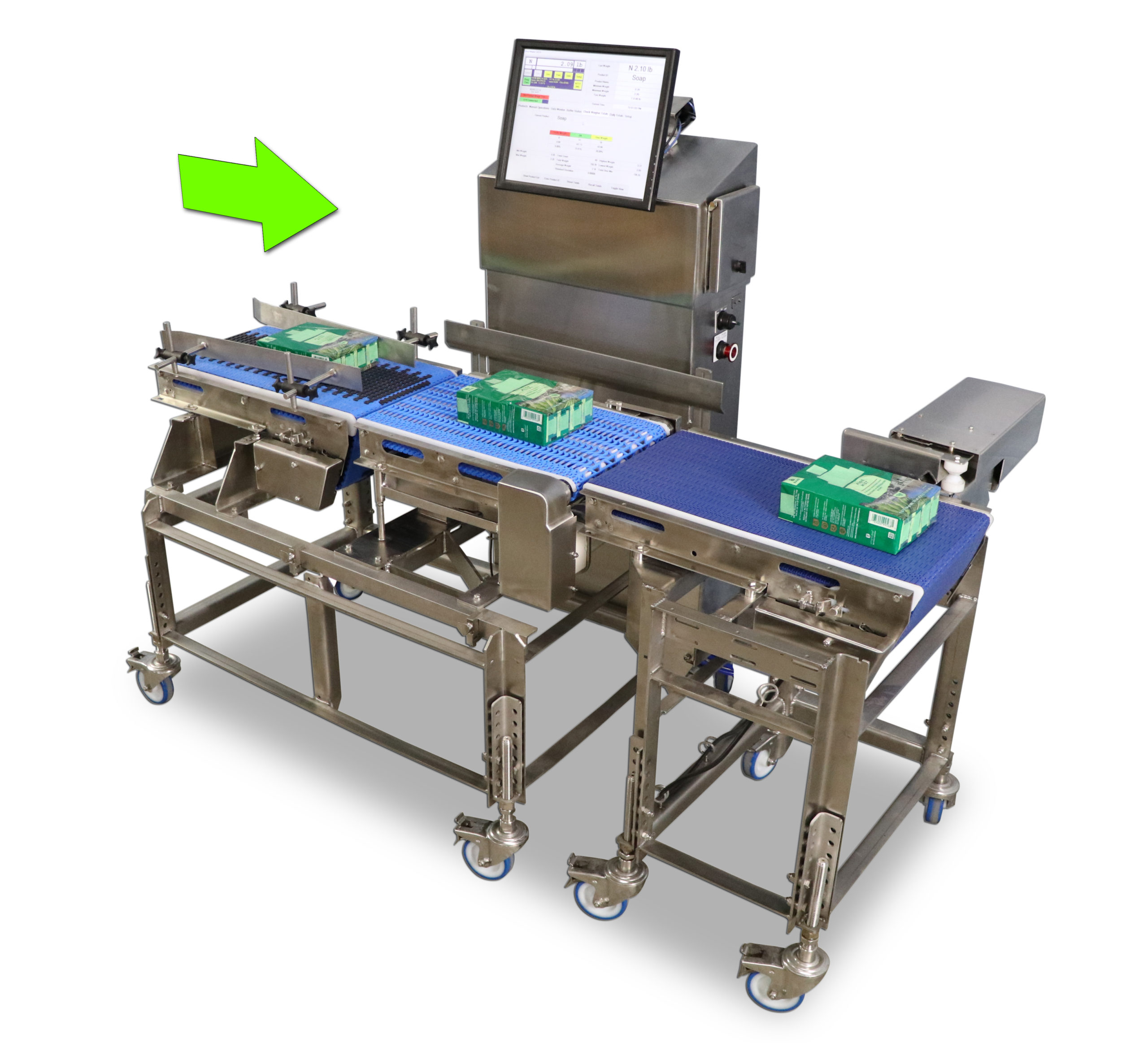
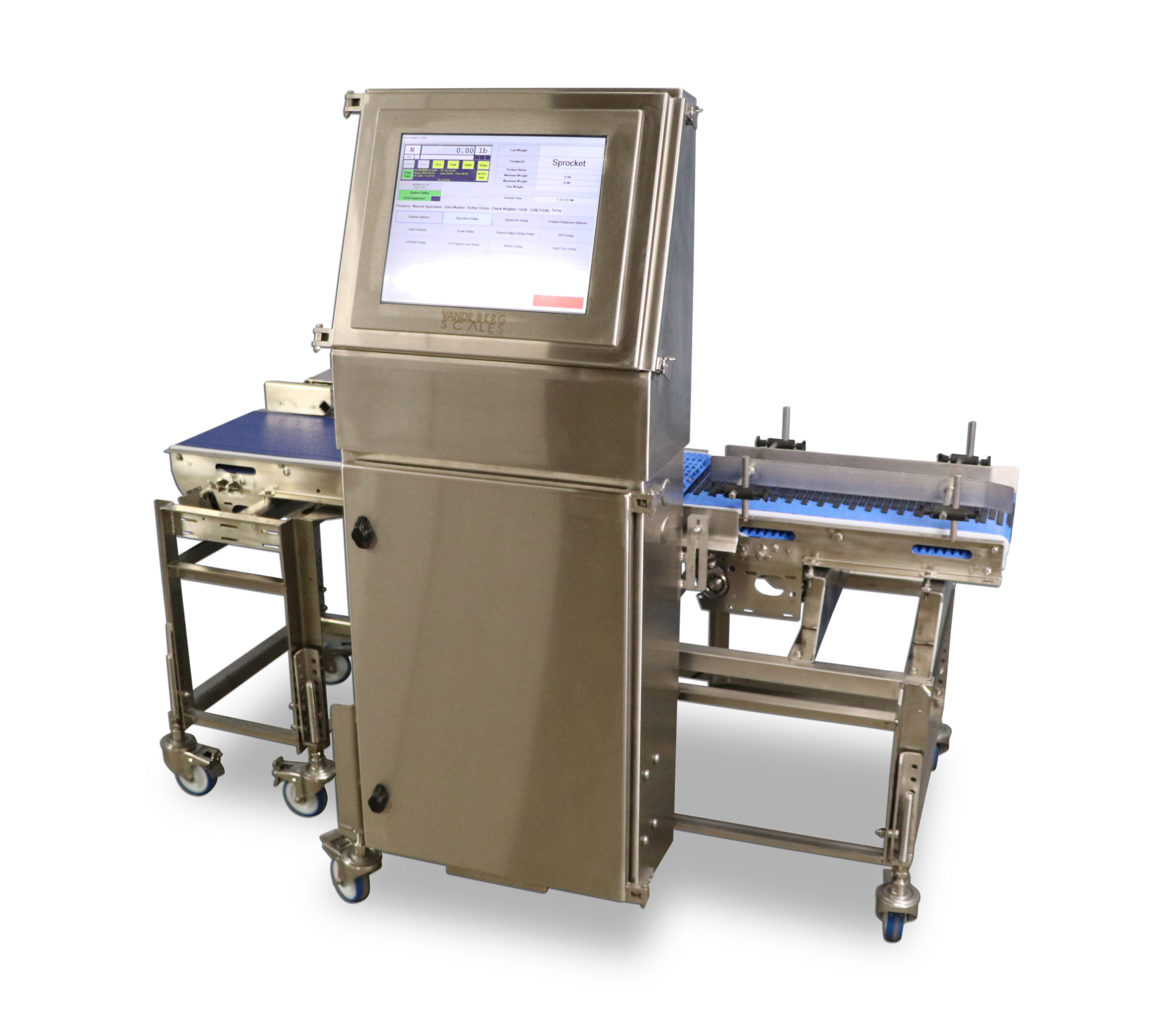
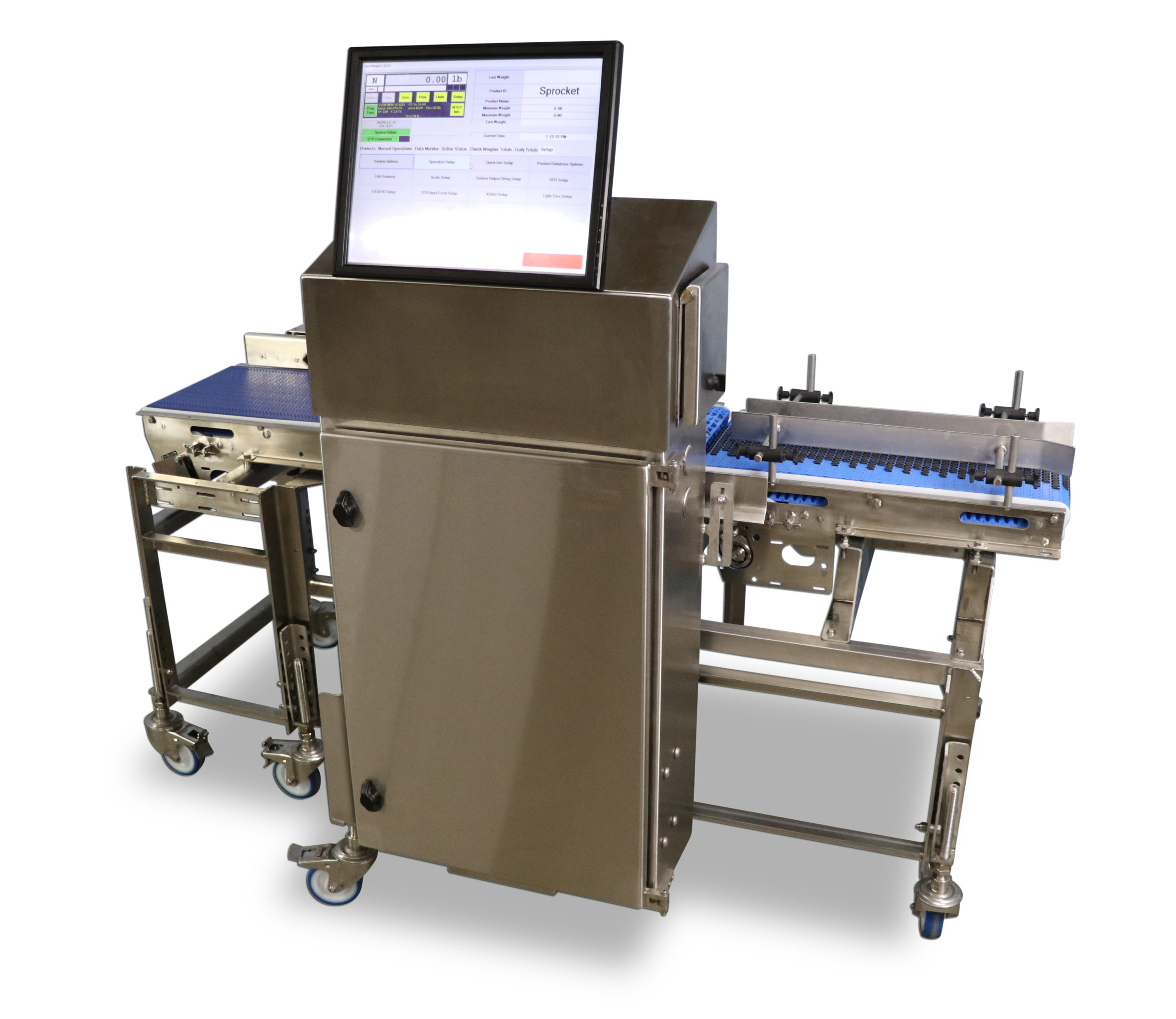
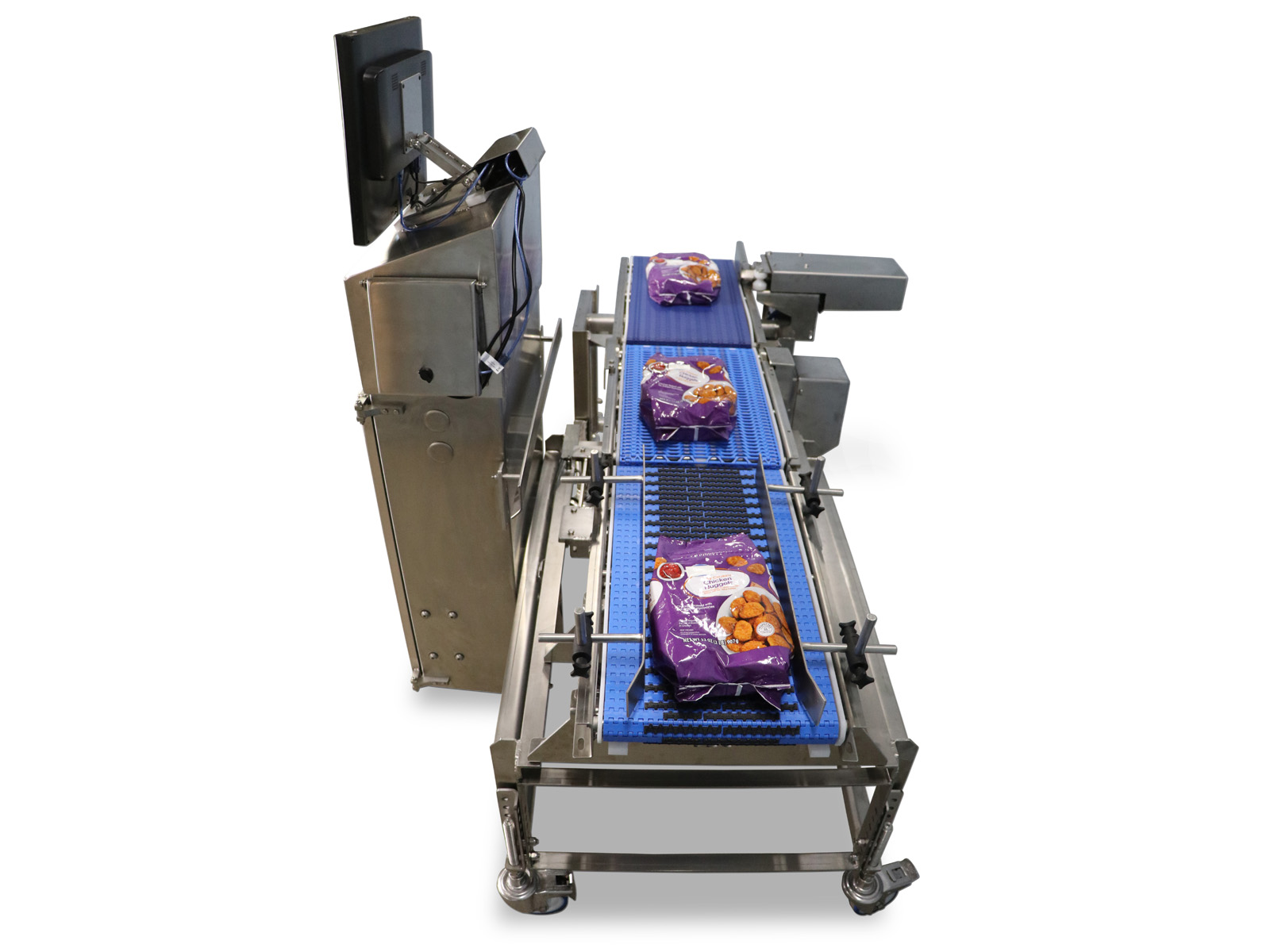
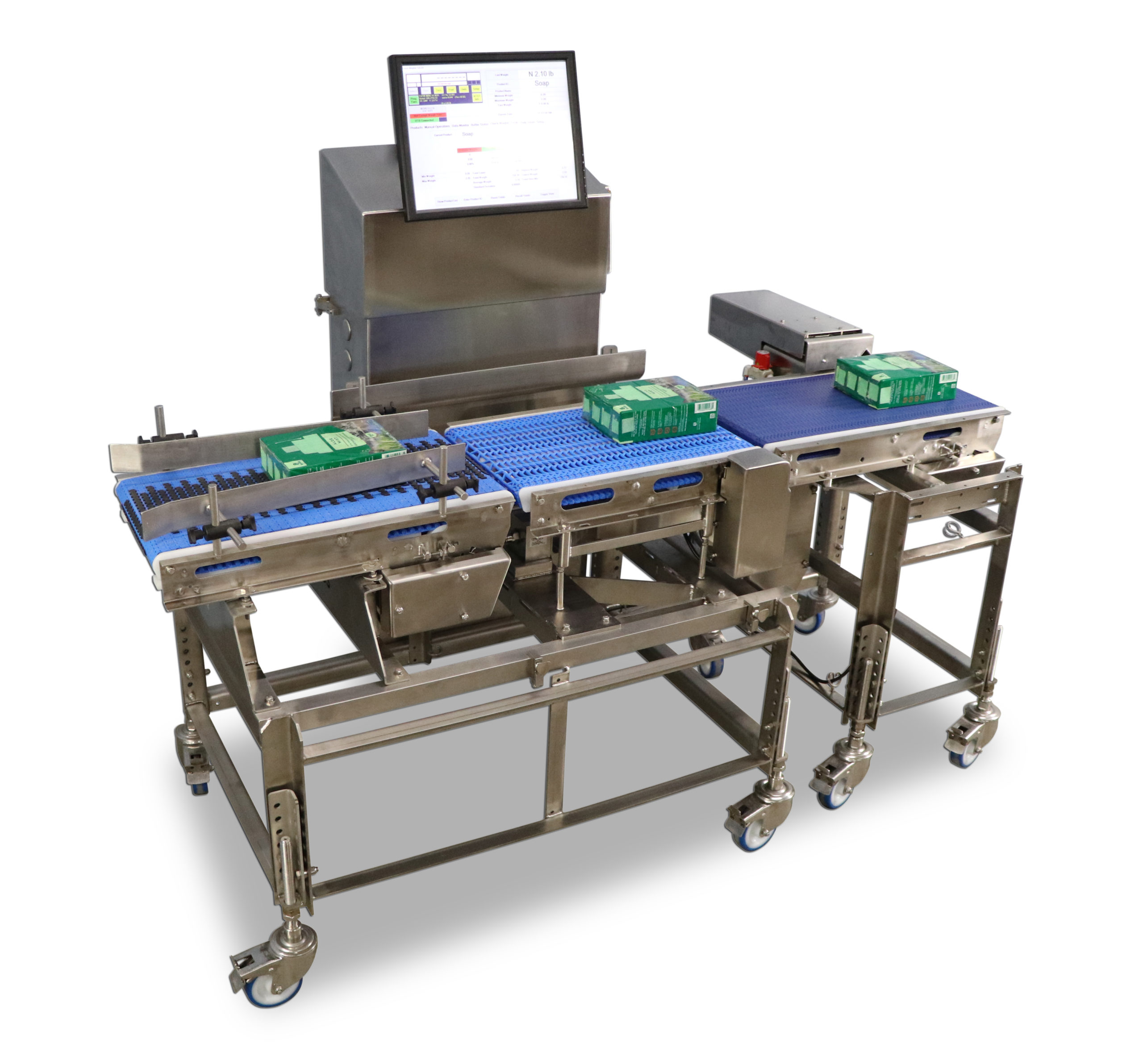
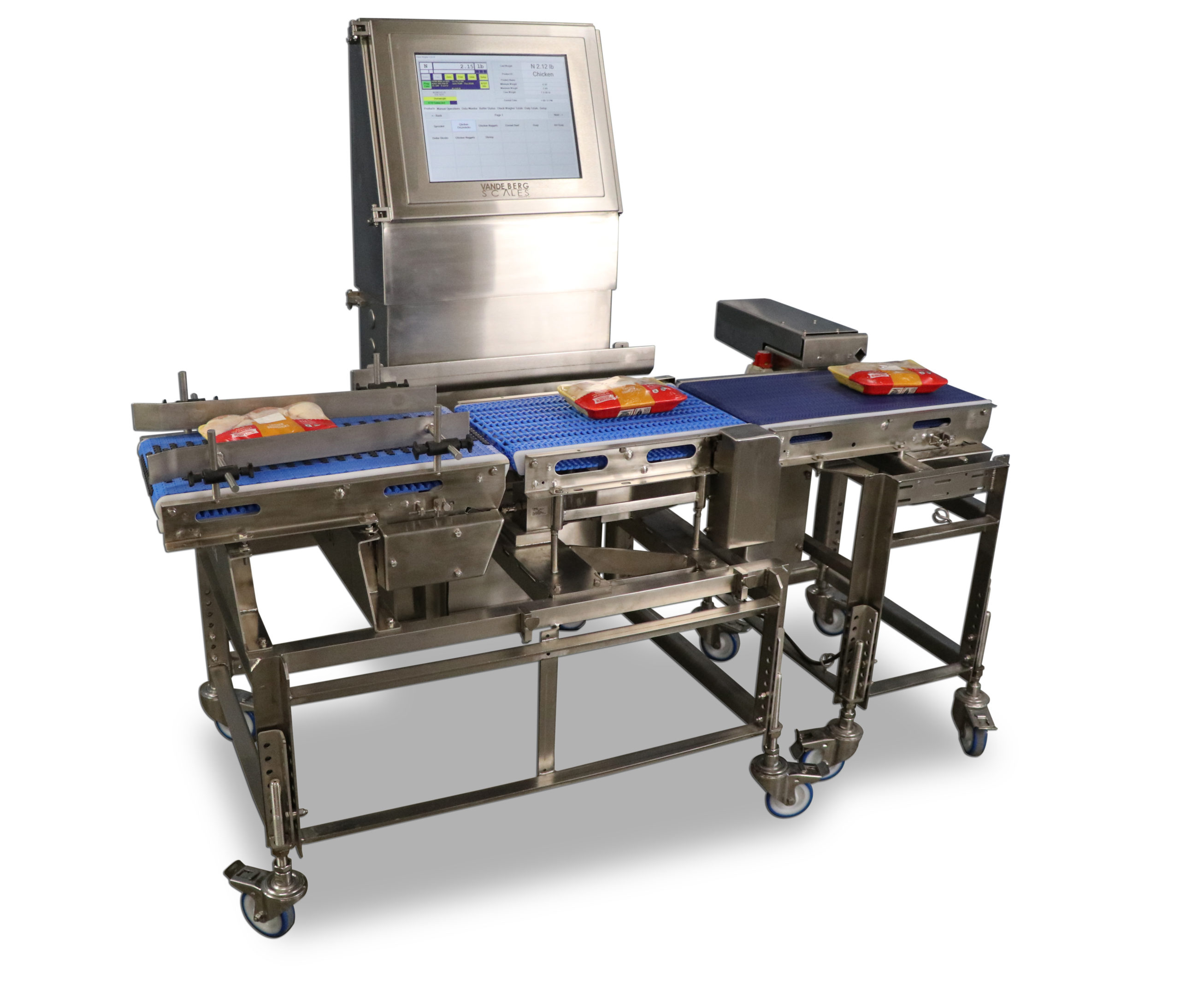
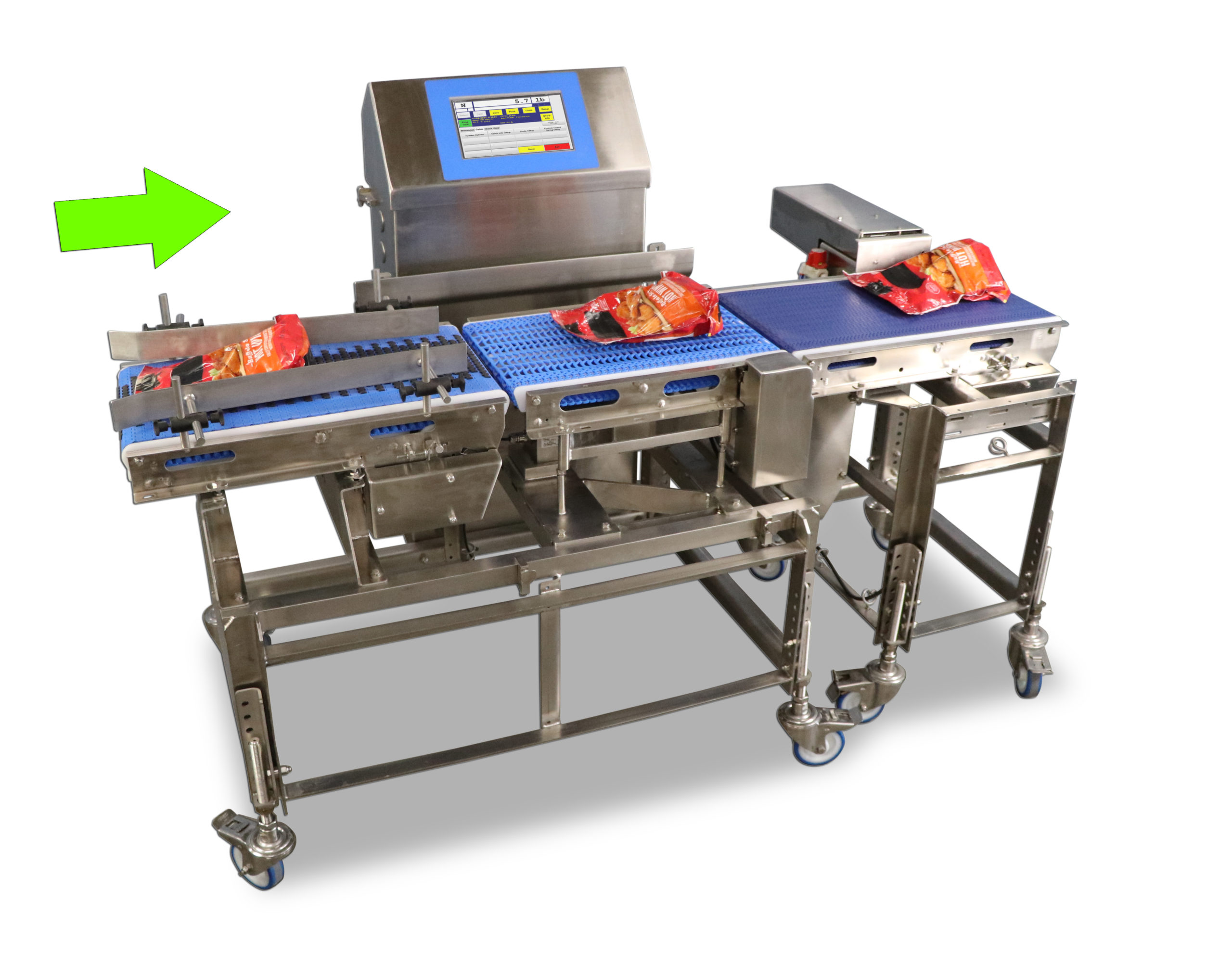
Conveyor can be configured as left to right, or right to left. Divert and screen can be on either side for maximum operational efficiency.
Tired of Small Displays?
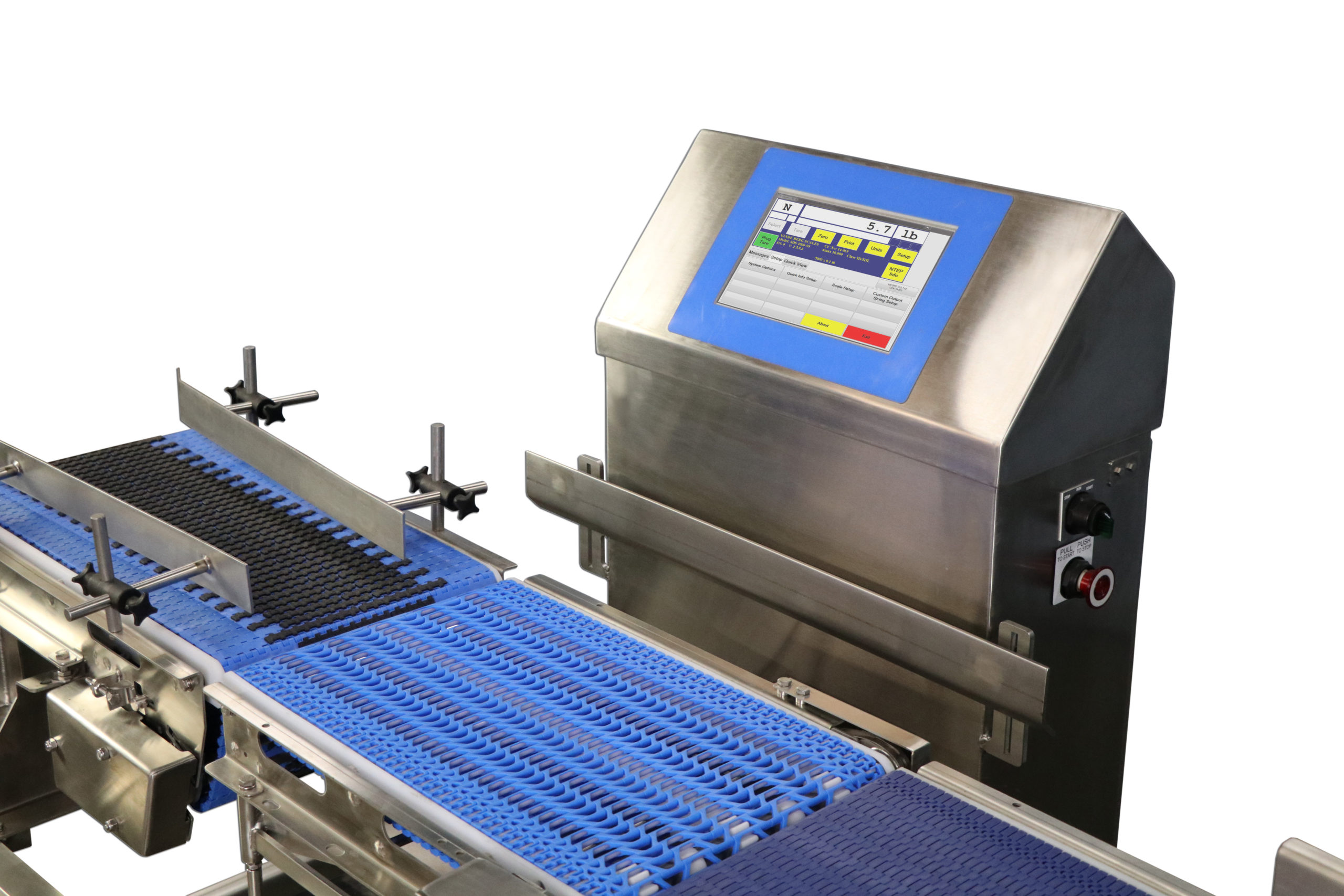
VBS integrates an impressive standard 17″ Human Machine Interface display for almost unlimited reporting and display options. Large displays also reduce deep system settings that are hard to find.
No parts pricing sucker punches!
VBS uses standard, industry-available components that are easily attainable from multiple vendors, in the design and construction of our equipment assuring our customer economical, simplified, fast and efficient maintainability.
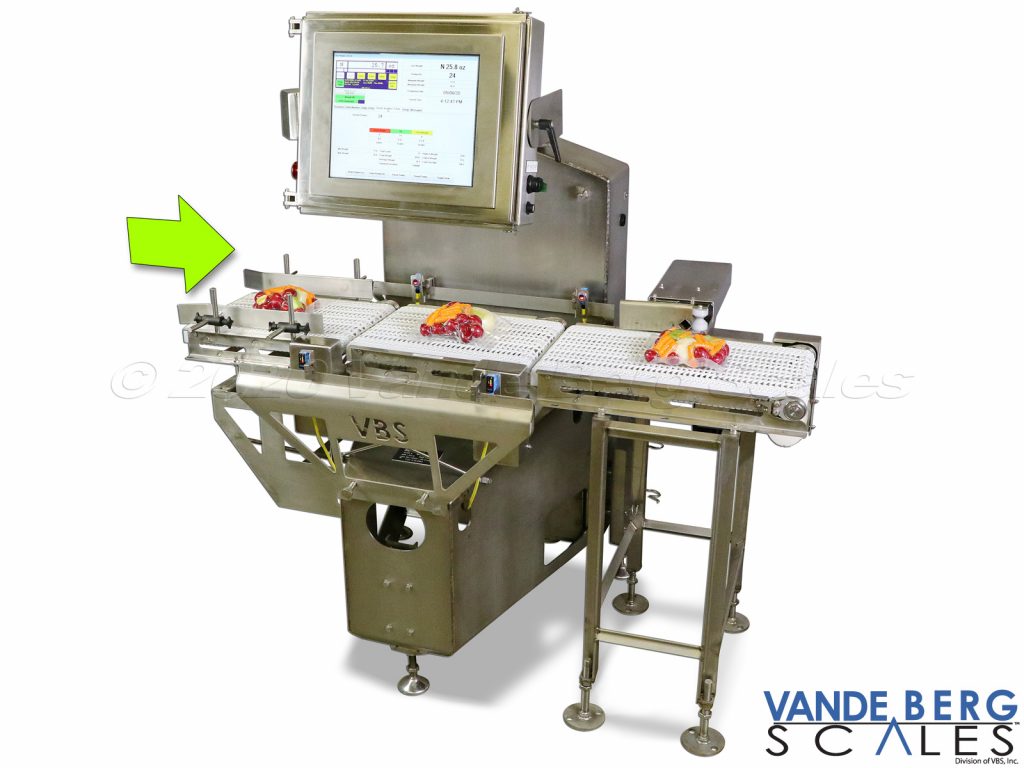
The Ecoline™ Scale Data System (SDS)-based medium weight/speed In-Motion Checkweigher provides fantastic value and simplicity for your weighing accuracy needs, handling many in-motion checkweigher applications with ease.
Features & Benefits:
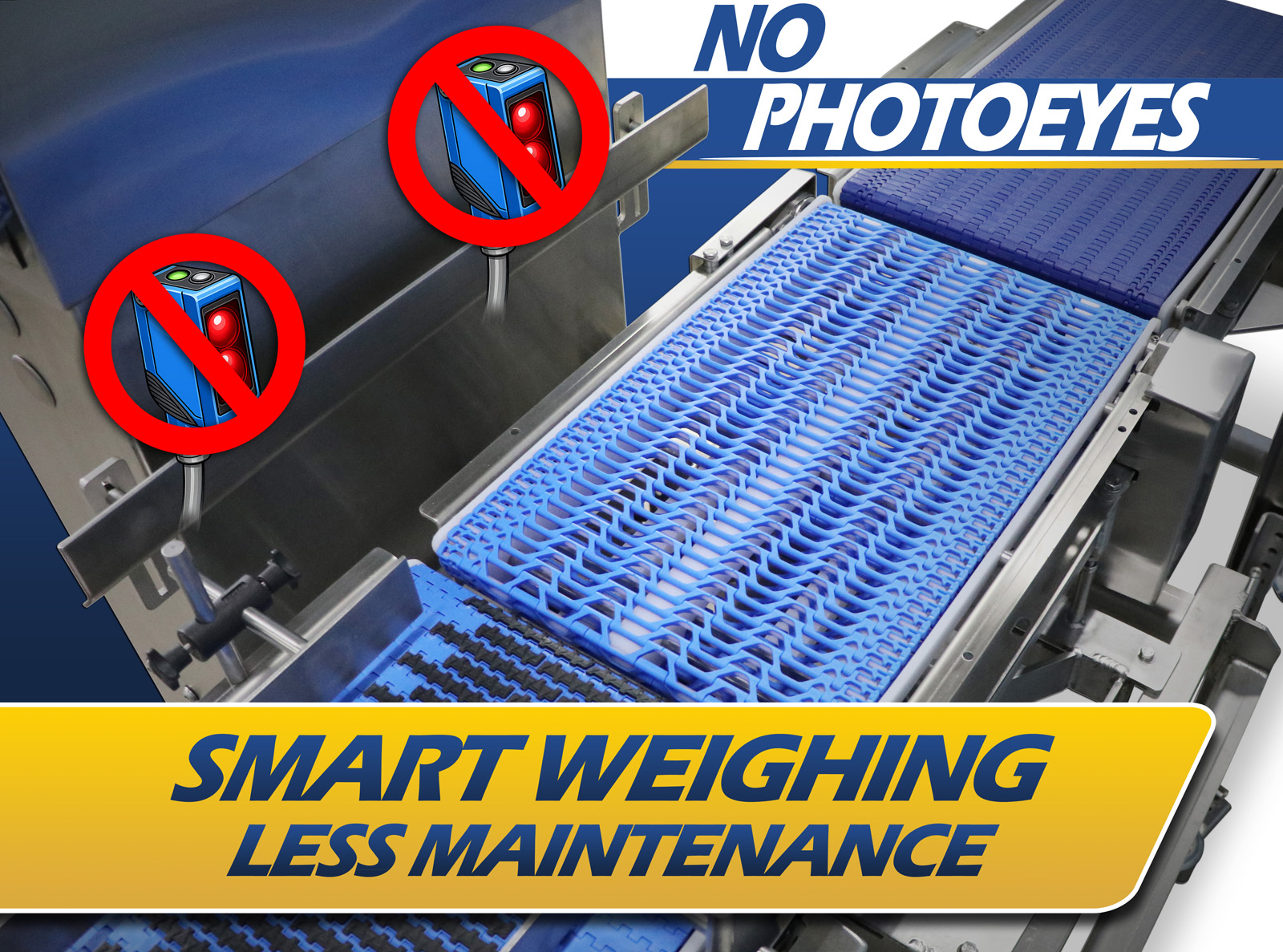
- No photoeyes - an industry first!
- Reduces false rejects and rework thereby saving time and money
- Lower cost vs. Tri-point checkweigher
- Reduces product “giveaway” which saves you money
- non-washdown & washdown options
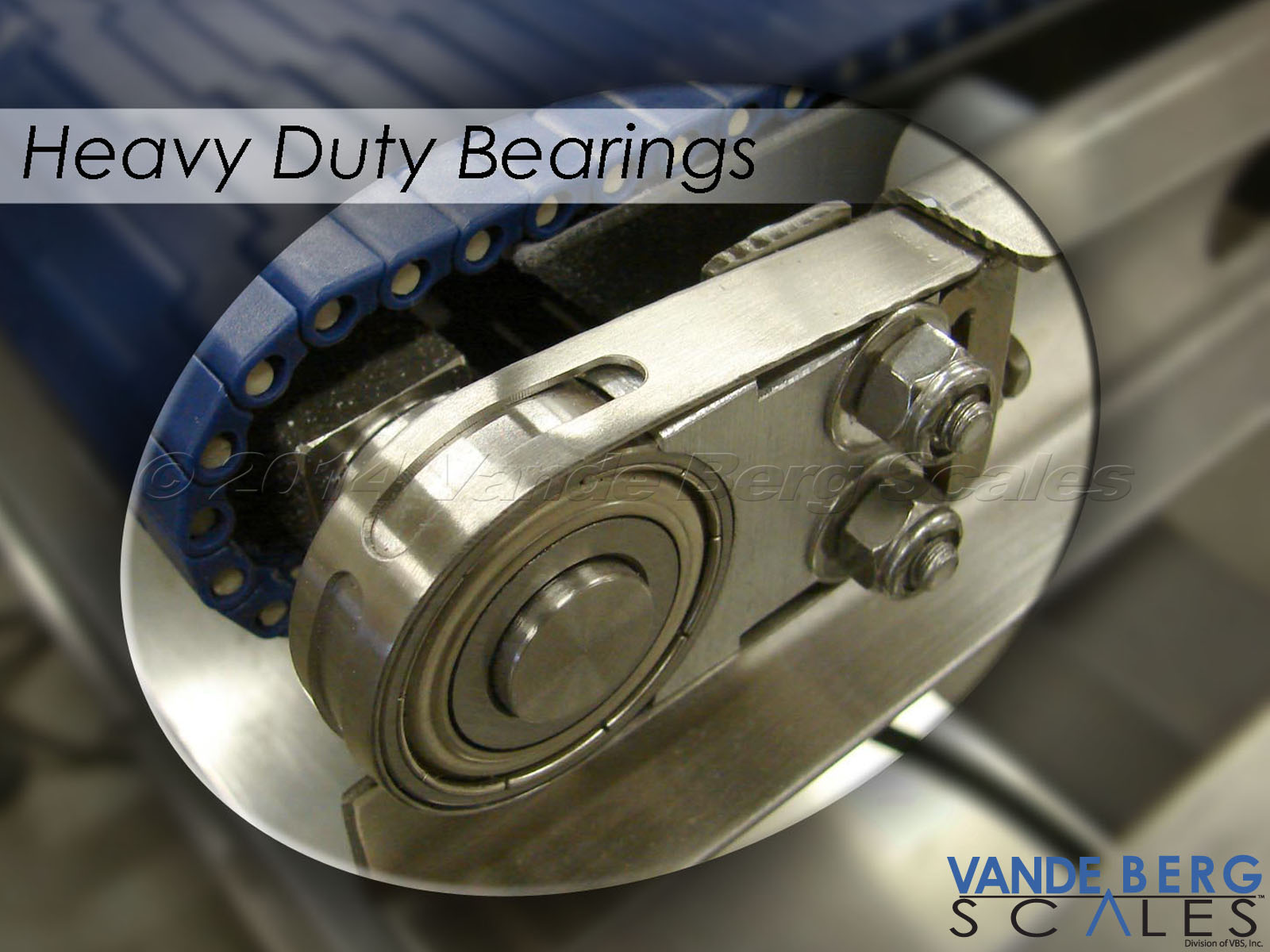
- Off-the-shelf parts ensure you can easily source replacement components so you are back in operation.
Design Features:
Advantages of no photoeyes:
- less parts to fail
- no cleaning
- no aligning
- can still ensure weighing accuracy by reading the weight curve
Capacity x Resolution (Standard)
200 lb x 0.1 lb
100 lb x 0.05 lb
40 lb x 0.02 lb
20 lb x 0.01 lb
10 lb x 0.005 lb
Capacity x Resolution (Metric)
100 kg x 0.05 kg
40 kg x 0.02 kg
20 kg x 0.01 kg
10 kg x 0.005 kg
4 kg x 0.002 kg
Additional Features
- VFD to automatically change conveyor speed based on product length. This allows optimum weighment of each type of product.
- Ethernet TCP/IP & Serial (RS-232) communication is standard. Ethernet IP is additional.
- Large touchscreen HMI for ease of operator viewing and interface
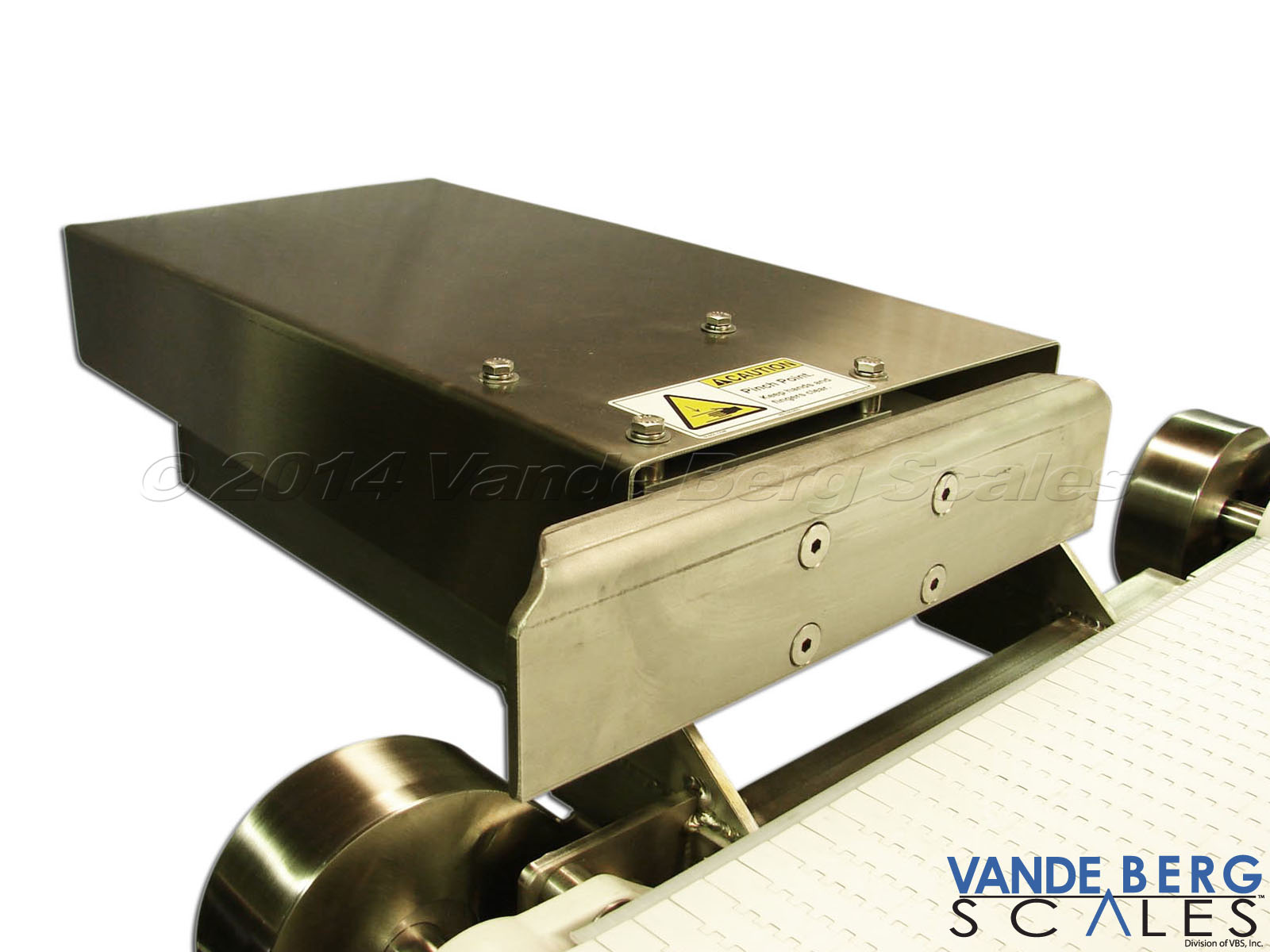
- Draft shield protects scale from environment triggered weighing errors
FAQ
A conveyor scale simply acquires the weight and send it out.
An automatic checkweigher will acquire the weight, compare the weight against an upper and lower limit, and then take an action. Just a few examples of actions are illuminate a light, stop a conveyor or divert the product off the line for rework (most popular). Our checkweigher will also store the weight for later analysis.
No. Stopping the conveyor for each product would significantly increase component wear & tear, and reduce the throughput.
Even while in motion our NTEP certified scale and algorithm will accurately determine the weight of the weight of the product.
Most of the time, No. A checkweigher is primarily used to validate how well a package, or container, was filled upstream. The upstream scale, or filling machine, needs to be NTEP. However, VBS is one of the few companies that offer an NTEP certified checkweigher.
Yes to both. We offer RS-232 (serial) and Ethernet communication as standard. You can see the database being populated or export the data after a finished run. (Ethernet IP option is also available.)
An inline checkweigher can weigh product in the conveyor line without having to pull the product off of the line and place it on a scale. This allows 100% product weight sampling.
Innovative In-line Checkweigher Design Elements
Single drive design virtually eliminates the harmonics that can result when you have dual drives (one on each conveyor end). Harmonics often develop when motor speeds are not precisely matched. The result is internal scale movements that can significantly affect weighing accuracy.
It took years to figure out, but we finally came up with a single load cell design. The result is a scale that is more reliable and less cost. The reduced cost part is obvious, but what about the reliability? Most scales have 4 load cells (one of each corner), so when one load cell fails, the entire scale is out of commission. Having a single load cell design significantly reduces the chances of overall load cell failure.
Since we only have one load cell, we can reduce cost by eliminating the junction box.
Moment forces need to be considered with a single load cell design. VBS has engineered a unique multi-angled bracing that consistently transfers weight to the middle, where the load cell is located.
Our Experience
- Poultry, boneless breasts, tenders, lobes, wings or any chicken component
- Beef, hamburger patties, ground beef, loaves, chubs, brisket, sirloin, beef ribs, roast (any type of meat)
- Pork chops, bacon, pork bellies, baby back ribs, St. Louis ribs, ham, loins, picnics, or any pig product
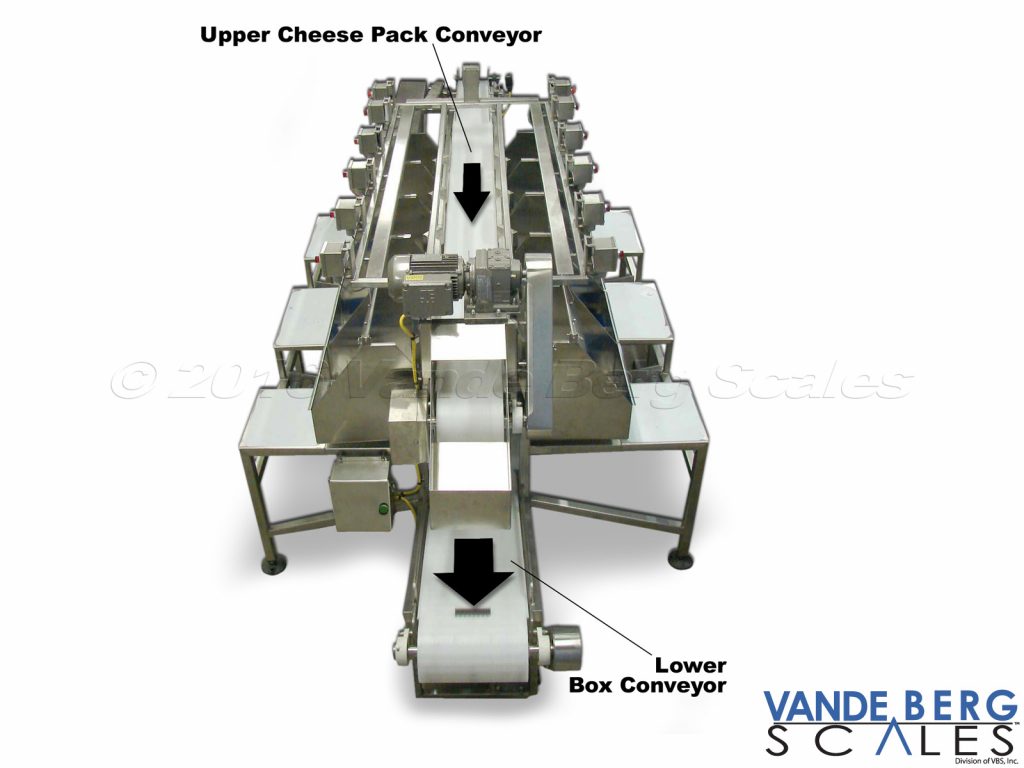
- Dairy, cheese, milk, cream, yogurt
- Turkey, drumsticks, thighs, leg quarters, lamb chops, duck
- Boxes, bags, sacks, paint cans, cans, bottles, pouches, etc.
- Corn/bean seed, bag, potatos, onions, flower bulbs
Want to generate reports and push product info to the floor?

Data Management Software
- Pulls data from VBS floor units
- Pushes PLU info from office to the floor
- Generates reports (can also generate reports in real-time)
- Allows office personnel to see real-time scale data (i.e. product being run)
- more info
Downloadable PDF Resources
Importance of an Infeed Conveyor
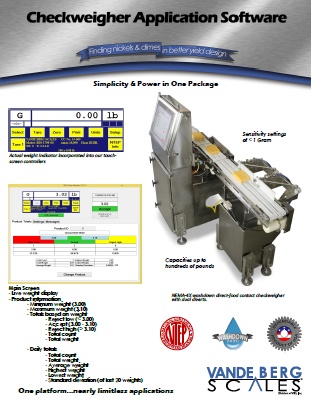
Ecoline Checkweigher Application Software
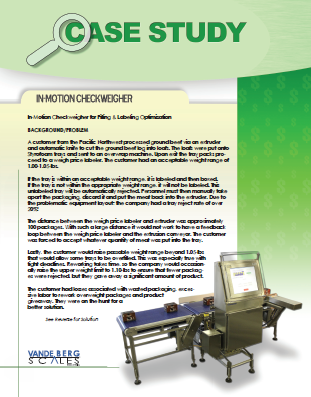
Checkweigher Case Study - Huge Savings!
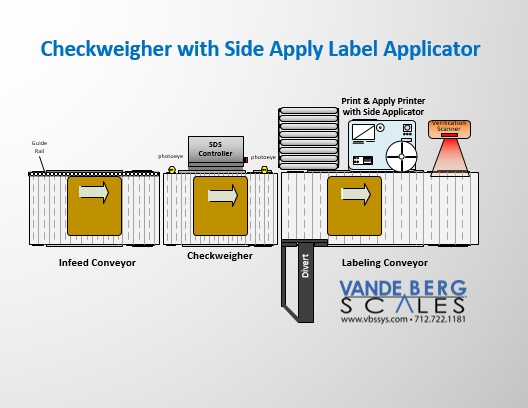
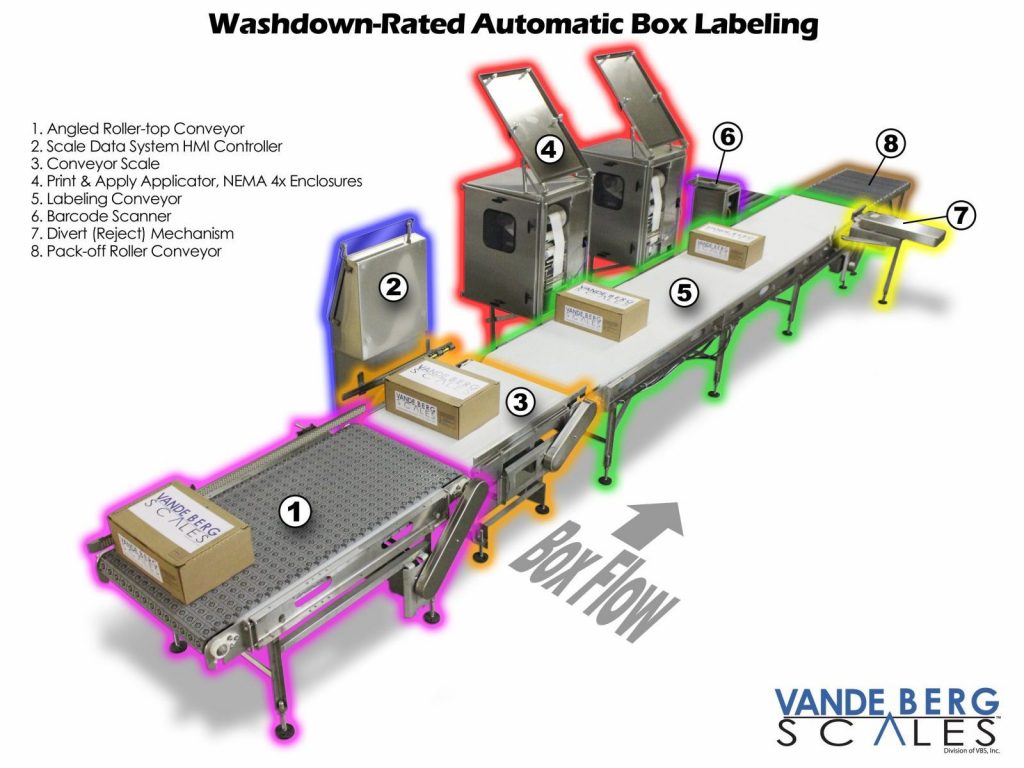
In-Line Checkweigher with Side Labeling & Scanning
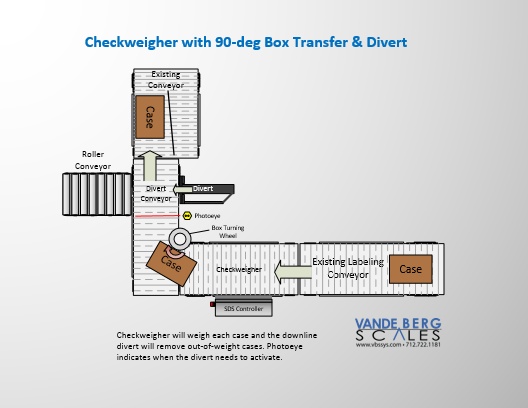
Checkweigher with 90-deg Box Transfer
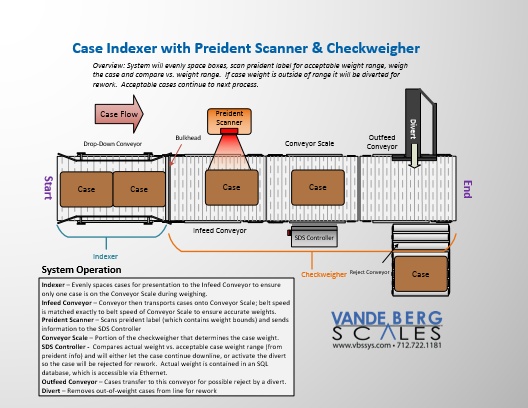
Checkweigher with Label Printing and Scanning
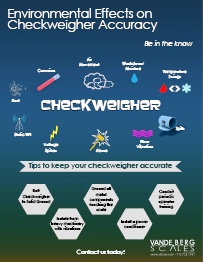
Sources of Checkweigher Scale Weighing Errors
Need a Quote in a Hurry?
Download our questionnaire and fill it out to get a quote.
Didn't find what you're looking for? Try these products.